
How Major Events Shape Promotional Product Trends in Australia
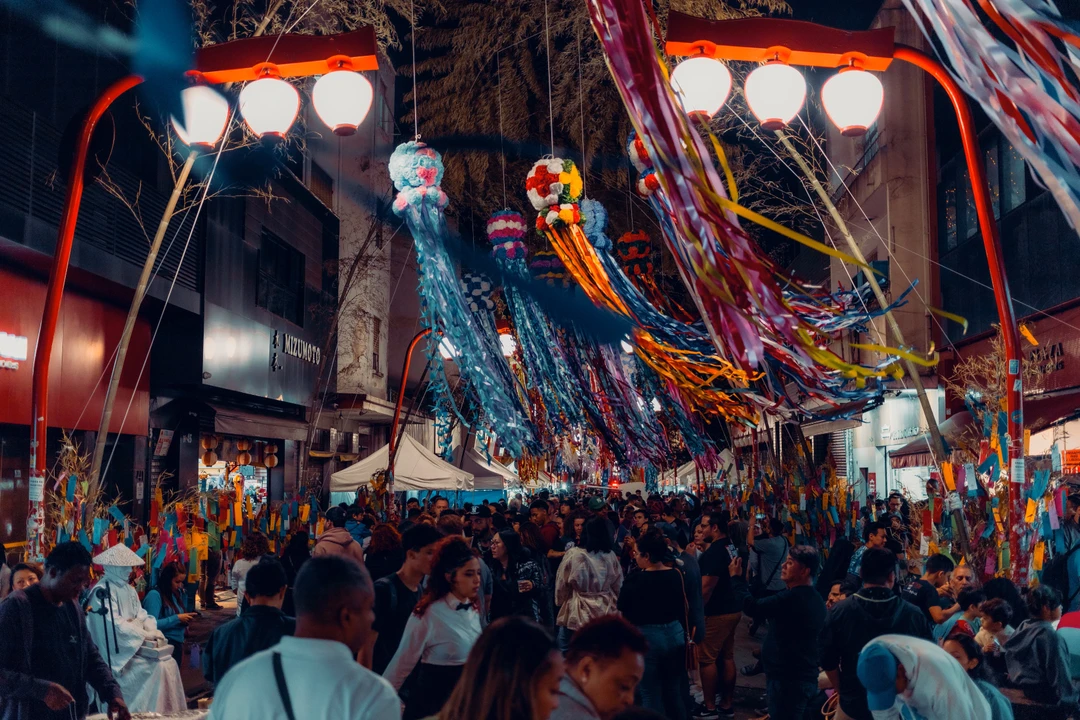
Australia is entering the busiest decade of major events in its history. The Men's Rugby World Cup arrives in October 2027, the Women's Rugby World Cup follows in 2029, and Brisbane hosts the Olympic and Paralympic Games in 2032. Each one will reset what Australian audiences expect from branded merchandise.
Those expectations have already shifted. Promotional products are no longer judged against other promotional products — they are judged against the drink bottle, tote and hoodie the recipient already chose to buy. Major events accelerate that comparison by putting high-design, high-function merchandise in front of millions of people at once.
This article covers what changed, why it changed, and how Australian businesses should select event merchandise as a result.
What are the biggest promotional product trends in Australia?
The seven trends currently reshaping Australian promotional merchandise are:
- Sustainable and reusable products — driven partly by consumer demand and partly by the ACCC enforcement risk
- Premium-quality merchandise in smaller quantities
- Functional products with a daily use case
- Minimalist, lifestyle-led branding over oversized logos
- Event-specific and limited-edition runs
- Performance apparel and technical accessories
- Merchandise tied to audience identity, not just company identity
The commercial logic behind all seven is retention. APPA research puts Australian marketer spend on promotional products at more than $1.34 billion a year, and the reason that spend holds up is longevity: 55% of recipients keep a promotional item for more than a year, close to half use one daily, and 76% recall the brand on the product. A product that gets kept keeps advertising. A product that gets binned advertised once.
Source: Australasian Promotional Products Association
How do sporting events influence promotional product trends?
Major sporting events raise the floor on performance, durability, sustainability and design — because they put professionally designed merchandise into mass circulation and give audiences a new reference point.
Paris 2024 is the clearest recent example. Ralph Lauren produced its first 100% recycled cotton polo for Team USA. Asics cut the emissions of Team Japan's uniforms by roughly 34% against its Tokyo 2020 kit and printed the production carbon figure on the garments. The medals used 100% recycled gold and silver, certified by the Responsible Jewellery Council. Podiums were built from wood and 43 tonnes of recycled plastic.
Four consequences for Australian promotional merchandise:
Performance fabrics moved from sport into corporate. Moisture-wicking, quick-dry and lightweight technical fabrics are now expected in event apparel, not treated as an upgrade.
Material provenance became a question people ask. Paris drew criticism precisely because only about 15% of its licensed product range was locally made using organic or recycled materials. Audiences now notice the gap between the sustainability story and the merchandise table.
The quality floor rose. Recipients handling a $60 retail hoodie one weekend and a promotional tee the next are making an unavoidable comparison.
Branding got quieter. The most-worn event apparel usually carries restrained marks. Clean design outperforms logo size for retention.
The lesson is not to imitate official sporting merchandise — licensing law prevents it and audiences see through it anyway. The lesson is to identify what makes that merchandise worth keeping and apply the same standard.
What does Rugby World Cup 2027 mean for Australian event merchandise?
The Men's Rugby World Cup 2027 runs from 1 October to 13 November 2027 — the largest edition ever staged, with 24 teams contesting 52 matches across eight stadiums in seven host cities: Adelaide, Brisbane, Melbourne, Newcastle, Perth, Sydney and Townsville. It opens with Australia against Hong Kong China at Perth Stadium and finishes at Stadium Australia in Sydney.
World Rugby projects AU$1.3 billion in direct visitor expenditure from more than 250,000 international visitors.
That matters for merchandise planning in three specific ways:
Six weeks, seven cities, spring weather. October and November across Perth, Townsville and Adelaide means sun protection, hydration and lightweight apparel — caps, bucket hats, reusable bottles, cooling towels. This is a very different brief from a European autumn tournament.
A quarter of a million international visitors. Merchandise for this window needs to work in a suitcase and read clearly to someone unfamiliar with your brand.
Supply chain compression. Every Australian business activating around the same six weeks is competing for the same decoration capacity and freight. Sampling and production slots for late 2027 should be locked well ahead of the tournament.
Sources: World Rugby, Rugby Australia
What can Brisbane 2032 teach Australian businesses about event merchandise?
The Brisbane 2032 Olympic Games run 23 July to 8 August 2032, with the Paralympic Games from 24 August to 5 September 2032 — a four-week window with a two-and-a-half-week gap between them, across venues in Brisbane, the Gold Coast, Sunshine Coast, Moreton Bay and Redlands.
Two things make Brisbane 2032 useful to plan against now rather than later.
Sustainability is structural, not decorative. Brisbane 2032 is built around using existing infrastructure with upgrades rather than new builds. That framing sets the expectation every associated brand will be measured against for the better part of a decade.
The lead time is the point. Nine of the ten trends businesses will chase in 2031 are already visible in how Games merchandise programmes are being scoped today. Businesses that treat 2032 as a 2031 problem will be sourcing in the most congested merchandise market Australia has ever had.
Five questions worth asking of any event product, now or in 2032:
- Materials: What is it made from, and can that be substantiated?
- Function: Does it have a use case after the event ends?
- Design: Would someone wear or carry it without the logo?
- Relevance: Does it fit this audience, in this environment, in this season?
- Longevity: How many impressions does it generate over its life, not on day one?
Sources: Brisbane 2032, Queensland Government
How do music festivals influence event merchandise trends?
Music festivals turned merchandise into something people pay for rather than something they're given. That is the most important shift in the category, and it happened almost entirely outside the promotional industry.
Festival merchandise is designed to be worn, photographed and collected. It works because it signals membership of something. The design conventions that follow from that:
- Bold, expressive graphics that stand alone as design
- Limited-edition and dated runs
- Comfort-first apparel weights and cuts
- Crossbody bags and practical carry
- Vintage and heritage-inspired treatments
- Products that read as lifestyle, not as corporate
The transferable principle: merchandise works when it feels desirable rather than disposable. A shirt someone would have bought keeps generating impressions for years. A shirt someone was handed generates one.
For Australian businesses, this means event merchandise does not need to look like corporate merchandise. It needs to look like something that belongs in the recipient's life.
Why are cultural events changing promotional merchandise?
Cultural events demonstrate that merchandise can carry identity and story rather than just a logo.
Community festivals, national celebrations and cultural events push merchandise toward:
- Design elements with genuine local specificity
- Collaborations with local makers and artists
- Seasonal and place-specific products
- Natural and low-impact materials
- Products that connect to a particular audience rather than a general one
Three questions separate effective cultural merchandise from generic merchandise with a different colourway:
- Does this product reflect the audience, or just the brand?
- Does it add to the event experience, or sit beside it?
- Would someone use it a month later?
Where First Nations design or cultural motifs are involved, authentic collaboration and fair commercial terms with the artist are non-negotiable — both ethically and reputationally.
How are technology conferences raising promotional product standards?
Technology conferences raised the quality floor faster than any other event category, because their audiences spend their working lives surrounded by well-designed hardware and software. A novelty giveaway lands badly in that room.
Tech events popularised:
- Premium cable and tech organisers
- Laptop sleeves and travel accessories
- Insulated drinkware at retail quality
- Functional desk products
- Minimally branded, retail-grade goods
A cable organiser that lives in someone's work bag generates impressions every time it's opened — potentially hundreds over its life. PPAI research finds 79% of recipients go on to research the brand behind a promotional product they receive, and 82% form a more favourable opinion of it. Those numbers only apply to products people actually engage with.
Functionality is now the mechanism by which visibility is earned.
What makes a promotional product trend worth following?
A trend is worth following when it improves retention for your specific audience. Everything else is noise.
Five filters before adopting any product trend:
Is it useful? Does the recipient have a real reason to reach for it?
Is it relevant? Does it fit their lifestyle, work environment and the event setting?
Is it durable? Will it survive repeated use, or fail in a month and take the brand's reputation with it?
Does it fit the brand? Does the product support the positioning, or contradict it?
Does it outlive the event? Post-event use is where the return actually accumulates.
The newest product is rarely the best product. The most effective promotional merchandise solves a real problem for the recipient.
What are the most important sustainable promotional product trends?
Sustainability in Australian promotional merchandise is now a compliance question, not only a marketing one.
The ACCC's 2022 internet sweep found that 57% of the businesses reviewed were making potentially misleading environmental claims. The regulator published its final guidance, Making environmental claims, in December 2023, setting out eight principles for substantiating green claims. It has since taken enforcement action — including proceedings against Clorox Australia over "50% ocean plastic" claims on its GLAD to be GREEN range, where the recycled plastic was collected up to 50 kilometres inland.
The stakes rose sharply this year: for conduct on or after 28 March 2026, the fixed-amount component of the maximum penalty for corporations under certain Australian Consumer Law provisions is $100 million.
The practical consequence for merchandise buyers: if a supplier calls a product eco-friendly, you need to be able to evidence what that means, because you are the one making the claim to your audience.
Evaluate lifecycle instead of labels:
- What is the product actually made from, and in what proportion?
- Is there certification — GRS, GOTS, FSC, OEKO-TEX — or just a description?
- Is it genuinely reusable, and how many uses before it degrades?
- Does it replace a disposable alternative in the recipient's routine?
- What happens at end of life?
Sustainable promotional products work best in Australia when responsible materials are paired with real function and durability. A certified-material product nobody uses is worse for the environment than no product at all.
Sources: ACCC environmental claims guidance
→ Explore Brandconnect's sustainable promotional range
What are the best promotional products for major events?
The right product depends on audience, environment, season and objective. These categories map reliably to event type:
|
Event type |
Product categories |
Why it works |
|
Sporting events |
Performance apparel, caps, insulated drinkware, cooling towels, drawstring bags |
Outdoor, active, weather-exposed |
|
Music festivals |
Tees, crossbody bags, bucket hats, reusable bottles |
Worn on the day, kept afterward |
|
Conferences |
Tech organisers, notebooks, premium drinkware, laptop sleeves |
Travels home in a work bag |
|
Cultural events |
Reusable bags, apparel, locally made goods |
Identity and provenance matter most |
|
Corporate events |
Premium drinkware, executive gifts, tech accessories |
Quality signals the relationship |
|
Outdoor events |
Caps, bottles, towels, sunscreen, practical carry |
Australian sun is the design constraint |
Audience relevance beats product novelty every time. A product becomes valuable when it fits the environment where it's received and the life it goes home to.
→ Browse Brandconnect's full promotional product range
How should Australian businesses plan event merchandise?
Plan 12–24 months out for major campaigns. For Rugby World Cup 2027, that means sourcing decisions in 2026. Early planning buys flexibility on product, sampling, decoration and freight — the four things that fail under time pressure.
Research the audience, not the trend list. What do they already wear, carry and drink from? Match that, don't override it.
Choose quality over quantity. Two hundred products people keep outperforms two thousand people don't.
Substantiate sustainability claims. Get certification documentation from your supplier in writing before the claim goes on your website.
Design for the week after the event. Post-event use is where the return compounds.
Match product to season and setting. An October tournament in Townsville and a July conference in Melbourne are different sourcing briefs.
How can AI help choose the right promotional products?
Brandconnect's AI-powered merch search matches product recommendations to your audience, industry and campaign requirements, rather than making you scroll a catalogue of thousands of SKUs.
It's most useful when you know the audience and the objective but not the product — which is the position most marketers are actually in. Describe the event, the audience and the budget, and it narrows the field to relevant options.
→ Try Brandconnect's AI merch search
What will shape the future of promotional merchandise in Australia?
Four expectations, in order of commercial weight:
Substantiated sustainability. Not claims — evidence. ACCC enforcement has made this a legal exposure, not a positioning choice.
Functionality. The product needs a job in the recipient's life.
Quality. Branded merchandise competes with what people buy for themselves.
Relevance. Right audience, right event, right season.
Australia's event decade — Rugby World Cup 2027, Women's Rugby World Cup 2029, Brisbane 2032 — will accelerate all four by showing audiences repeatedly what well-made event merchandise looks like.
The shift is from put a logo on it to give people something worth keeping.
Frequently Asked Questions
What are the biggest promotional product trends in Australia? Sustainability with substantiated claims, functionality, premium quality in lower quantities, minimalist branding, performance apparel and limited-edition event merchandise. The common thread is retention — APPA research shows 55% of recipients keep promotional items for more than a year.
How do sporting events influence promotional products? They raise expectations around performance fabrics, material provenance, quality and restrained design by putting professionally produced merchandise into mass circulation. Paris 2024's use of recycled materials in uniforms, medals and podiums set a reference point Australian audiences now apply to branded merchandise generally.
When is the Rugby World Cup 2027 in Australia? 1 October to 13 November 2027, across Adelaide, Brisbane, Melbourne, Newcastle, Perth, Sydney and Townsville — 24 teams, 52 matches, eight stadiums.
When are the Brisbane 2032 Olympic and Paralympic Games? The Olympic Games run 23 July to 8 August 2032. The Paralympic Games run 24 August to 5 September 2032.
What promotional products work best for sporting events? Performance apparel, caps and bucket hats, insulated reusable drinkware, cooling towels and drawstring bags. For Australian events, sun protection and hydration should drive the shortlist.
How far in advance should businesses plan event merchandise? 12–24 months for major campaigns. For Rugby World Cup 2027 activations, sourcing decisions should be made during 2026 to secure product, sampling, decoration capacity and freight.
How do I choose promotional products people will actually use? Start with what the audience already wears, carries and uses daily, then match it. Products that fit existing habits get kept; products that require new habits get discarded.
Key Takeaways
- Australia hosts three major events between 2027 and 2032 — plan merchandise against that calendar now.
- Choose usefulness over novelty; retention is where the return comes from.
- Fewer, better products beat high-volume giveaways.
- Match product to audience, season and setting, not to a trend list.
- Lock sourcing 12–24 months ahead for major campaigns.
- Use major events as a quality benchmark, not a design to copy.
Stay Ahead of Promotional Product Trends
Brandconnect sources promotional products, branded merchandise, sustainable ranges and corporate gifts for Australian businesses — from sustainable apparel and reusable drinkware to premium tech accessories and event merchandise.
Call 1300 567 565 or get in touch to start planning your next campaign.
Brandconnect blog: Insights, trends & merch tips
Avoidable Mistakes When Ordering Promotional Merchandise
Most wasted promotional merchandise budget doesn't come from a bad product category. It comes from a...
Why Branded Drink Bottles Beat Digital Ads on ROI
AI-generated content now fills most of what people scroll past in a day ; ads, emails, social posts,...
How Major Events Shape Promotional Product Trends in Australia
Australia is entering the busiest decade of major events in its history. The Men's Rugby World Cup a...

Branded Notebooks for Hybrid Teams: Why They Still Work
Hybrid work reset what counts as useful merchandise. Employees who move between office, home and cli...
Slow Branding: What Marketers Are Learning
Why Slow Branding Is Replacing Fast Promotional Product Strategies For years, promotional products f...
The Psychology of Touch: Why Physical Branding Still Matters
Why Haptic Marketing Creates Stronger Brand Memories Digital marketing dominates attention. Screens...