
How Branded Tote Bags Became a Daily Essential
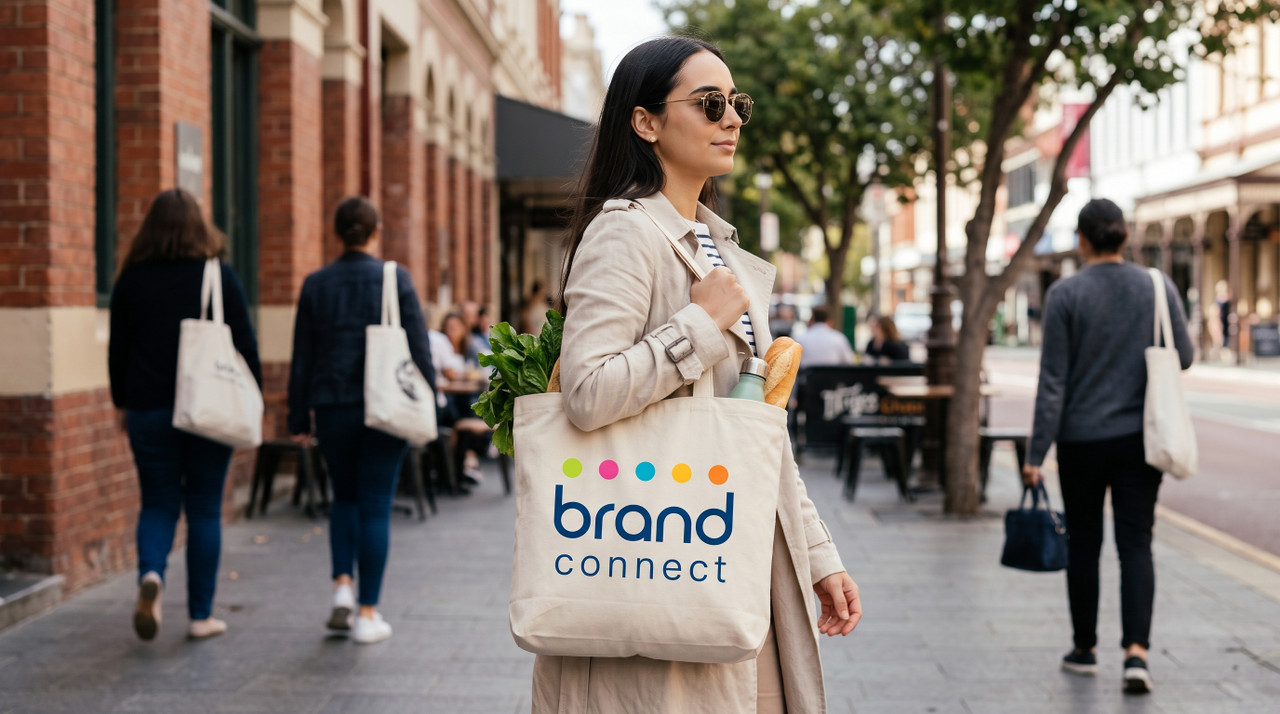
A branded tote bag used to mean a thin plastic-weave freebie handed out at a trade show. Today it's as likely to be the bag someone carries to the supermarket every week, and that shift wasn't really about design. It started with regulation removing the alternative, and quality, sustainability credentials and hybrid work did the rest.
How did plastic bag bans turn tote bags into a daily essential?
When Coles and Woolworths phased out free single-use plastic bags nationally, the National Retail Association recorded an 80% drop in plastic bag consumption within three months — roughly 1.5 billion fewer bags in circulation.
Source: National Retail Association
That behavioural shift has only extended since. South Australia, Western Australia, Victoria, Queensland and NSW have progressively legislated against single-use plastic bags and other single-use plastics, with Victoria's ban extending further from 1 January 2026 to cover additional plastic food and drink items. The practical result: a reusable bag isn't an optional extra for most Australian households anymore — it's the only bag available at the checkout.
For businesses, that regulatory shift did something most promotional products never achieve: it created a product category people need regardless of the branding on it, for grocery runs, gym trips, university, commuting and travel alike.
Why does daily use generate more brand exposure than most merchandise?
Pens disappear. Cheap gadgets break. Novelty items lose relevance almost immediately. Tote bags work differently because they integrate into a routine that repeats every week rather than a single event.
A reusable tote used three times a week for two years generates hundreds of brand impressions across supermarkets, shopping centres, universities, cafés, offices and public transport — all without feeling like advertising, because the bag is doing a genuine job every time it's used.
Unlike a digital ad that disappears the moment the budget stops, a tote bag stays physically present in someone's life for as long as it holds up.
What sustainability certifications should a branded tote bag have?
Because totes are now judged as an everyday household item rather than a giveaway, the material story behind them matters more than it used to — and it's increasingly something procurement teams are asked to document, not just describe.
- Organic cotton — softer, more durable long-term, and free of the pesticide-heavy cultivation of conventional cotton
- GOTS certification (Global Organic Textile Standard) — verifies organic fibre content and responsible processing through the full supply chain
- rPET (recycled PET) — bags woven from recycled plastic bottles, diverting plastic waste into a genuinely reusable product
- Recycled canvas — lower-impact than virgin cotton canvas while keeping the same durability profile
A supplier description isn't the same as certification. Ask for the certificate, not just the word "sustainable" on a product page.
Explore Brandconnect's sustainable range to compare tote bags by certification and material.
What construction details separate a tote that lasts from one that rips?
A tote only delivers on its daily-use potential if it survives the load a grocery shop, gym bag or commute actually puts on it:
- Heavyweight canvas or cotton (10oz+) rather than lightweight promotional-grade fabric
- Reinforced handles, stitched rather than simply glued or heat-sealed
- Double-stitched side and bottom seams at the stress points
- A gusseted bottom for real storage capacity rather than a flat, shallow bag
- Washable material that holds its shape after repeated use
A cheap tote fails at exactly the moment it's under load, which is also the moment it's most publicly visible — making construction quality matter more for totes than for almost any other merchandise category.
Why do tote bags suit hybrid work carry needs so well?
Hybrid work adds another daily-use case on top of grocery and errands. People now move constantly between home offices, corporate workplaces, co-working spaces and client meetings, and a tote offers lightweight, flexible storage for a laptop, charger, water bottle, notebook and daily essentials without the structure (or cost) of a dedicated laptop bag.
That versatility is part of why tote bags have shifted from single-event giveaway to something closer to a lifestyle accessory — one bag covering the supermarket, the gym and the commute rather than a different item for each.
Browse Brandconnect's bags and backpacks range to compare totes against structured bags for hybrid-work use.
Does branding style affect whether people carry a tote in public?
Yes, for the same reason it affects apparel: a large printed logo reads as advertising, and people are less willing to carry advertising into a supermarket or café than they are a bag that just looks like a bag.
Totes seeing the strongest voluntary use combine:
- Small, minimalist logo placement rather than full-panel prints
- Neutral colour palettes — black, white, natural canvas, olive
- Clean typography or simple illustration over corporate graphics
- Tone-on-tone branding that's visible up close but not at a glance
The trade-off is the same one that applies to apparel and drinkware: subtler branding means less impact in any single glance, but a bag people are willing to carry every week generates far more total exposure than one carried once and left in a cupboard.
Which tote material suits which use case?
|
Material |
Certification / profile |
Best use case |
|
Organic cotton canvas |
GOTS-certified |
General retail, grocery, everyday carry |
|
rPET recycled weave |
Made from recycled plastic bottles |
High-volume campaigns prioritising recycled content |
|
Recycled cotton canvas |
Lower-impact than virgin cotton |
Budget-conscious sustainable programs |
|
Jute or natural fibre |
Biodegradable, rustic aesthetic |
Market and lifestyle brand campaigns |
Frequently Asked Questions
Why did tote bags become so common in Australia?
State and retailer-led bans on single-use plastic bags — starting with Coles and Woolworths' national phase-out and followed by state legislation in SA, WA, Victoria, Queensland and NSW — removed the disposable alternative, making reusable bags a daily necessity rather than an optional extra.
What certification should I look for in a sustainable tote bag?
GOTS certification for organic cotton, or confirmation the material is genuine rPET (recycled PET) rather than described as "eco-friendly" without documentation. Ask your supplier for the certificate directly.
How heavy should tote bag fabric be to last?
10oz or heavier canvas holds up to regular grocery, gym and daily-carry use; lighter promotional-grade fabric tends to tear at the seams or handles within months.
Does logo size affect whether people carry a branded tote?
Yes. Large printed logos read as advertising and reduce how often people carry the bag in public; small, minimalist placements get carried more consistently because they read as a plain, usable bag rather than a promotional item.
Are tote bags a good fit for hybrid work merchandise programs?
Yes. They offer flexible storage for a laptop, charger and daily essentials at a lower cost than a structured laptop bag, and the same bag doubles for grocery, gym and travel use, which increases how often it's actually carried.
Key Takeaways
- Plastic bag bans cut national consumption by roughly 80% (1.5 billion fewer bags) within three months of the Coles/Woolworths phase-out, and state legislation has extended that shift since.
- GOTS certification and genuine rPET content are what separate a documented sustainable tote from one simply described as eco-friendly.
- 10oz+ canvas, reinforced handles and a gusseted bottom are the specifications that let a tote survive real daily use rather than tearing within months.
- Hybrid work adds a second daily-use case on top of grocery and errands, which is part of why totes now function as a lifestyle accessory rather than a single-event giveaway.
- Minimal, tonal branding gets totes carried more consistently in public than large printed logos, generating more total exposure over the item's life.
Build a Tote Bag Program People Actually Carry
The businesses seeing the strongest results aren't ordering the cheapest tote in bulk — they're choosing certified sustainable materials and construction that survives a genuine grocery run, commute or gym trip.
Browse Brandconnect's bags and backpacks range to compare totes and structured bags, or explore the sustainable range for certified materials. Call 1300 567 565 or visit brandconnect.com.au to get started.
Brandconnect blog: Insights, trends & merch tips
How Branded Tote Bags Became a Daily Essential
A branded tote bag used to mean a thin plastic-weave freebie handed out at a trade show. Today it's...
Custom Branded Apparel People Actually Wear
Most branded apparel doesn't fail because of the logo. It fails because of the garment underneath it...

Avoidable Mistakes When Ordering Promotional Merchandise
Most wasted promotional merchandise budget doesn't come from a bad product category. It comes from a...

Why Branded Drink Bottles Beat Digital Ads on ROI
AI-generated content now fills most of what people scroll past in a day ; ads, emails, social posts,...

How Major Events Shape Promotional Product Trends in Australia
Australia is entering the busiest decade of major events in its history. The Men's Rugby World Cup a...

Branded Notebooks for Hybrid Teams: Why They Still Work
Hybrid work reset what counts as useful merchandise. Employees who move between office, home and cli...