
The Psychology of Touch: Why Physical Branding Still Matters
Why Haptic Marketing Creates Stronger Brand Memories
Digital marketing dominates attention. Screens control most interactions. Brands fight for visibility in crowded feeds.
But here’s the uncomfortable truth:
people don’t remember screens the way they remember physical experiences.
Research in haptic marketing and touch psychology consistently shows that physical interaction creates 30–40% stronger and longer-lasting brand memories compared to digital impressions alone.
Why?
Because touch activates parts of the brain that digital experiences simply can’t reach.
That’s why physical promotional products still matter — not as outdated tools, but as high-impact, memory-building assets.
How Haptic Marketing Activates the Brain Differently
Touch isn’t just another sense — it’s processed differently at a neurological level.
When someone physically interacts with an object:
- The somatosensory cortex processes texture, weight, and sensation
- The limbic system (emotional centre) becomes more active
- Multiple senses engage simultaneously, strengthening memory encoding
Neuroscience research suggests that tactile experiences create significantly stronger emotional responses than visual input alone.
That’s the core of tactile branding: you’re not just showing a brand — you’re letting people feel it.
Why Tactile Branding Creates Longer-Lasting Memories
Digital impressions are fast — and forgettable.
Physical interactions are slower — and stick.
Studies in sensory marketing indicate:
- Physical experiences are remembered far more clearly than passive content
- Multi-sensory engagement creates stronger recall pathways
- Touch-based interactions are more likely to be stored in long-term memory
In simple terms: the more senses involved, the harder it is to forget.
That’s why a single high-quality physical product can outperform dozens of digital impressions over time.
Material Quality Shapes Instant Brand Perception
Here’s where it gets interesting — and brutal.
People don’t consciously analyse quality at first.
They feel it.
Within seconds of touching a product, users form judgments about:
- durability
- value
- professionalism
- brand credibility
Examples of tactile signals:
- Heavier, well-balanced items feel more premium
- Soft, high-quality fabrics feel more wearable
- Solid construction feels more reliable
- Smooth finishes feel more refined
These judgments happen before logical thinking kicks in.
So yeah — if your product feels cheap, your brand does too.
Why Digital Experiences Can’t Replace Physical Touch
No matter how advanced digital gets, it still can’t replicate:
- Physical texture
- Weight and balance
- Temperature (warm vs cold materials)
- Resistance and movement
- Real-world interaction
Screens deliver: visual + audio
Physical products deliver: full sensory experience
That’s why haptic marketing remains irreplaceable — it operates in a space digital simply doesn’t occupy.
Daily Interaction Creates Subconscious Brand Conditioning
This is where physical promotional products become insanely powerful.
It’s not just about having the item — it’s about how often it’s used.
Think about:
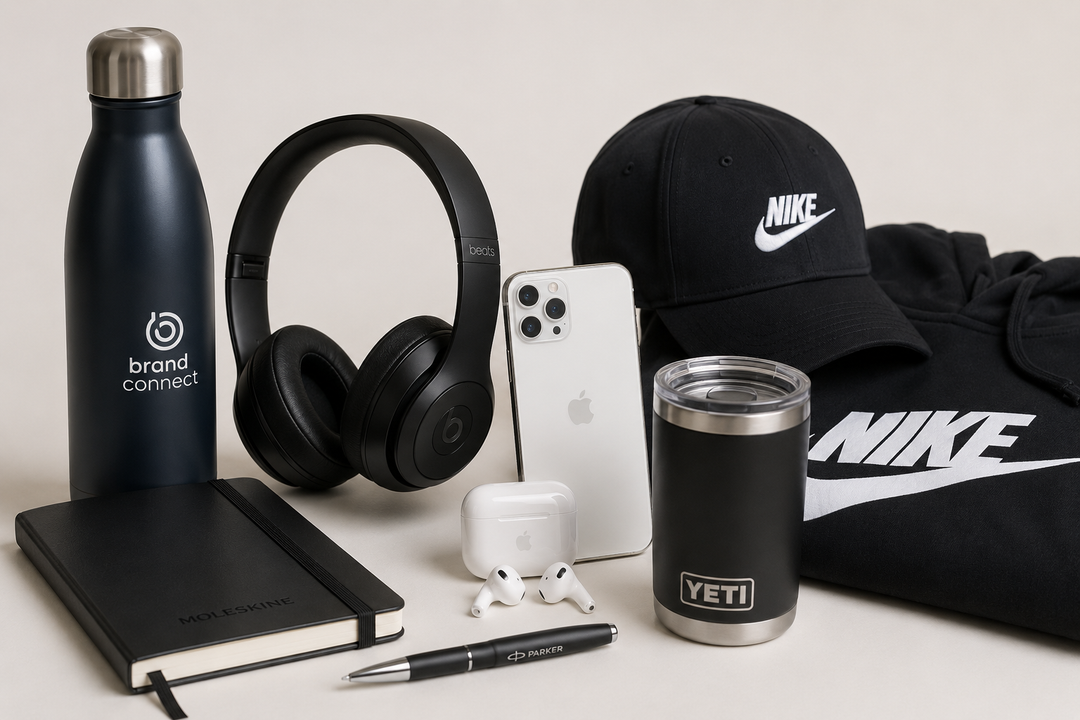
- Drinkware used multiple times a day
- Notebooks opened in meetings
- Apparel worn for hours at a time
- Accessories handled throughout the workday
Each interaction is small.
But over time? it becomes repetition-driven brand conditioning
Hundreds — sometimes thousands — of physical interactions create:
- familiarity
- trust
- subconscious recognition
Not through ads… but through habit.
Why Physical Branding Builds Deeper Emotional Connection
Touch isn’t just functional — it’s emotional.
Research in sensory marketing shows that tactile experiences are more emotionally engaging than purely visual ones.
Why that matters:
- Emotion strengthens memory
- Emotion influences perception
- Emotion drives decision-making
When a product feels good to use, that feeling transfers to the brand behind it.
That’s something digital banners and emails struggle to achieve.
Combining Digital Reach With Physical Depth
This isn’t about replacing digital — it’s about balancing it.
The smartest strategies combine both:
- Digital marketing → reach, frequency, awareness
- Physical branding → depth, memory, emotional connection
Use digital to get attention.
Use physical to make it stick.
That’s how modern haptic marketing strategies actually work.
How to Maximise Haptic Impact in Promotional Products
If you’re going to use physical products, do it properly.
Focus on:
Choose materials that feel noticeably better — not just look better.
More interaction = stronger memory formation.
- Solid Construction
Weight, durability, and build quality all influence perception.
- Tactile Enjoyment
Products should feel good to hold, wear, or use.
- Long-Term Durability
The longer it lasts, the more impressions it creates.
Cheap products kill haptic impact instantly. There’s no workaround.
Conclusion: Touch Creates What Digital Cannot
Digital marketing is efficient. Scalable. Fast.
But it lacks depth.
Haptic marketing and tactile branding fill that gap.
Touch:
- activates different brain pathways
- creates stronger memory encoding
- builds emotional connection
- reinforces brand perception through repeated use
That’s why physical promotional products still matter — and always will.
Because in a world overloaded with screens,
the brands people remember… are the ones they can actually feel.
✨ Ready to build stronger brand connections through haptic marketing?
Brandconnect helps Australian businesses create tactile branding experiences using premium promotional products designed for real-world use and long-term impact.
Call 1300 567 565 or visit brandconnect.com.au to get started.
Brandconnect blog: Insights, trends & merch tips

Avoidable Mistakes When Ordering Promotional Merchandise
Most wasted promotional merchandise budget doesn't come from a bad product category. It comes from a...

Why Branded Drink Bottles Beat Digital Ads on ROI
AI-generated content now fills most of what people scroll past in a day ; ads, emails, social posts,...

How Major Events Shape Promotional Product Trends in Australia
Australia is entering the busiest decade of major events in its history. The Men's Rugby World Cup a...

Branded Notebooks for Hybrid Teams: Why They Still Work
Hybrid work reset what counts as useful merchandise. Employees who move between office, home and cli...

Slow Branding: What Marketers Are Learning
Why Slow Branding Is Replacing Fast Promotional Product Strategies For years, promotional products f...

The Psychology of Touch: Why Physical Branding Still Matters
Why Haptic Marketing Creates Stronger Brand Memories Digital marketing dominates attention. Screens...